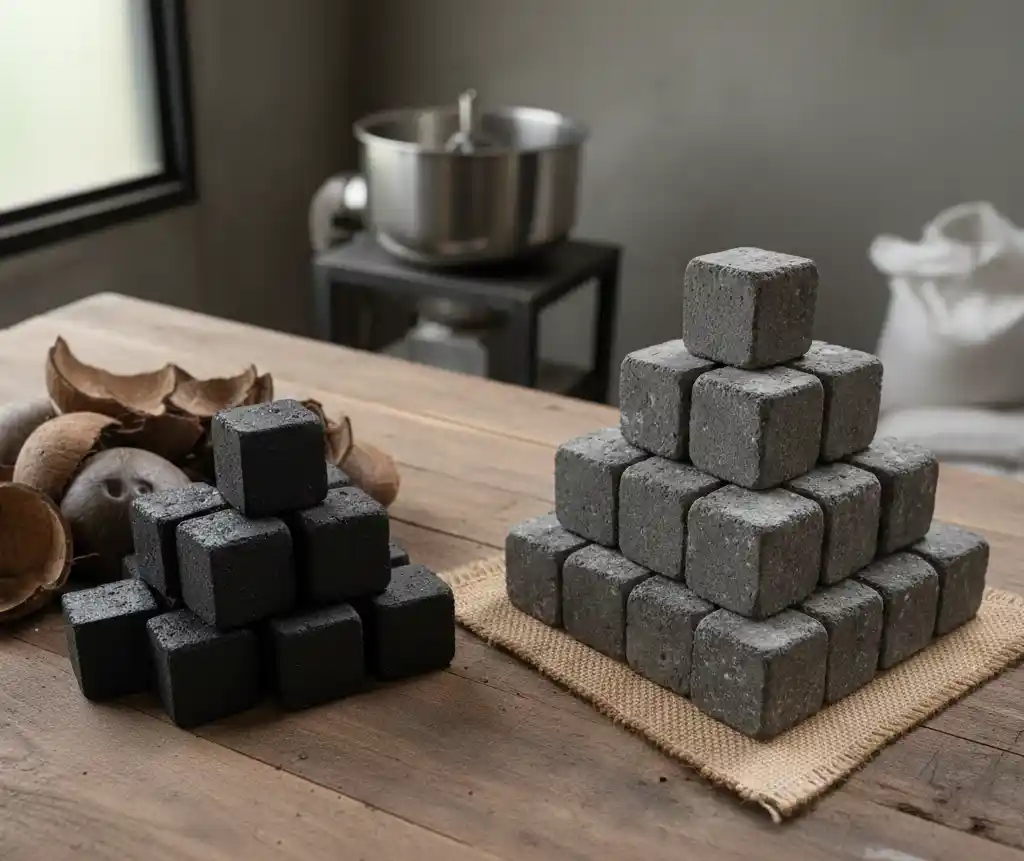
For anyone interested in producing or using high-quality coconut charcoal briquettes, understanding their combustion performance is essential. If you are new to this process, the Complete Guide to Making Briquettes from Coconut Shells offers a comprehensive overview of production, from raw material preparation to final drying. For broader insights on coconut-based products, industry trends, and practical tips, jacoid.com provides useful resources suitable for both beginners and experienced producers.
Testing the combustion quality of coconut charcoal briquettes helps ensure that they burn efficiently, last longer, and provide consistent heat output, which is critical for both household and industrial use.
Why Combustion Quality Matters?
The combustion quality of briquettes determines how well they burn, the heat they produce, and the amount of smoke or residue generated. High-quality briquettes ignite easily, maintain a stable flame, and produce minimal ash. Low-quality or poorly processed briquettes may burn unevenly, smolder, or produce excessive smoke, reducing their efficiency. Testing combustion quality ensures producers deliver reliable fuel and that consumers get consistent performance.
Factors Affecting Combustion Quality
Several factors influence the burning performance of coconut charcoal briquettes:
-
Moisture Content: Briquettes with too much moisture burn poorly and may smolder. Ideally, fully dried briquettes contain less than 10% moisture.
-
Density and Compression: Properly compressed briquettes maintain their shape and burn steadily. Loose or soft briquettes tend to break apart during burning.
-
Charcoal Quality: The type and carbonization level of the coconut shell charcoal affects ignition, flame stability, and heat output.
-
Binders: Natural binders like starch burn cleanly, while excessive or synthetic binders can reduce combustion efficiency.
How to Test Combustion Quality

Before evaluating the overall performance of coconut charcoal briquettes, it is important to conduct simple tests that reveal their combustion quality. By carefully observing ignition, flame behavior, burn duration, and the amount of smoke or ash produced, producers and users can determine whether the briquettes meet quality standards. The following tests provide a practical way to assess these key characteristics:
-
Ignition Test: Light a single briquette to see how quickly it ignites. A high-quality briquette should catch fire easily without accelerants.
-
Flame Observation: Watch the flame for stability and intensity. A consistent flame indicates good combustion quality.
-
Burn Duration Test: Measure how long the briquette burns under controlled conditions. High-quality briquettes burn steadily for a longer time.
-
Smoke and Ash Evaluation: Observe the smoke produced and the amount of ash remaining. Minimal smoke and ash indicate clean, efficient burning.
Tips for Accurate Testing
-
Conduct tests in a safe, ventilated area.
-
Use a consistent setup, like a heat-resistant tray or stove, for reliable results.
-
Record observations carefully, noting ignition time, flame stability, burn duration, and smoke output.
Conclusion
Knowing how to test the combustion quality of coconut charcoal briquettes is crucial for anyone involved in their production, distribution, or use. By carefully evaluating factors such as ignition, flame consistency, burn time, and ash output, producers and users can ensure that the final product performs efficiently and reliably. Proper testing not only helps identify potential issues early but also guarantees that the briquettes provide clean, consistent heat and long-lasting fuel for both domestic and industrial applications. Regular assessment of combustion quality ultimately contributes to higher customer satisfaction, improved safety, and better overall product standards.