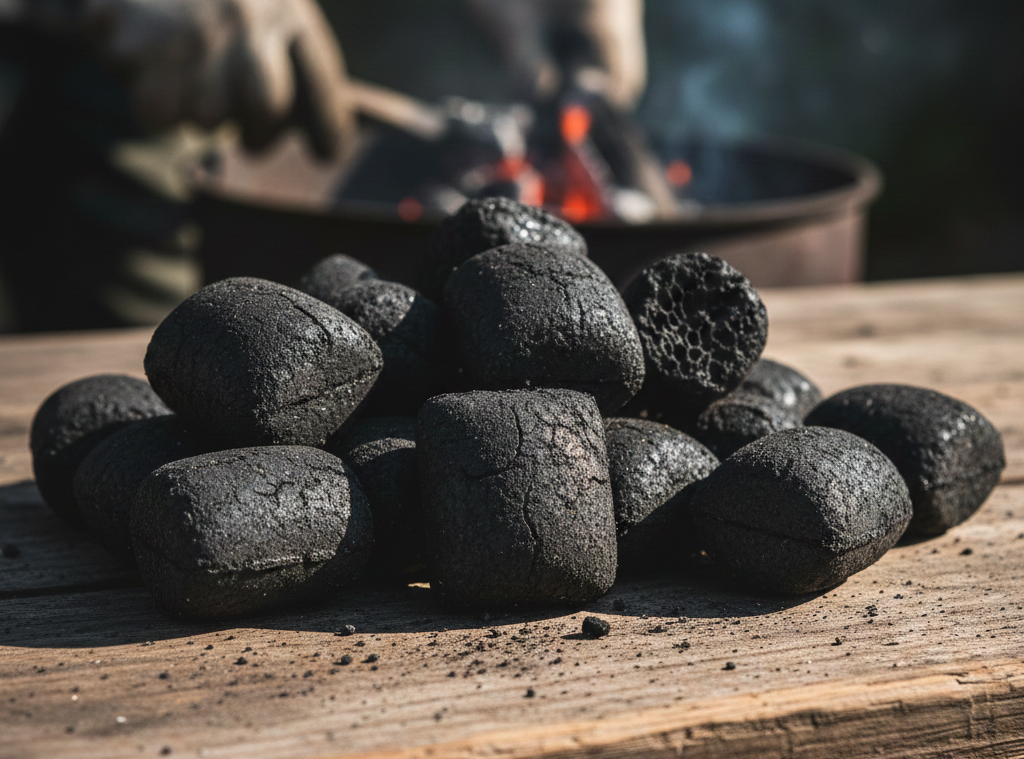
Understanding the best coconut shell briquette mixture for durability in production is essential for manufacturers who want consistent, long-lasting products. Many producers refer to the main guide, Coconut Shell Briquette Mixture for Durability and Resistance to Breakage, to understand the technical foundation, while broader industry insights and supporting resources can also be found on filmusica.com as a complementary reference. These resources help explain how proper material balance and production control lead to stronger briquettes without compromising efficiency.
High-Quality Coconut Shell Charcoal as the Base Material
A durable briquette starts with high-quality coconut shell charcoal. The charcoal should be fully carbonized, clean, and finely crushed to produce a consistent texture. Uniform charcoal powder improves density and helps briquettes hold their shape during pressing and drying. If the particles are too coarse, the briquettes can crack easily and burn unevenly.
Balanced Binder Composition for Strong Structure
Binder composition is another key factor in ensuring durability. Most producers use natural binders such as tapioca starch because they create strong bonding between charcoal particles. The binder ratio must be balanced: too little binder causes fragile briquettes, while too much can reduce burning efficiency and increase smoke. A stable mixture usually focuses on maintaining strength without affecting combustion quality.
Moisture Control in the Mixing Process
Moisture balance plays a major role in the production process. The mixture should be moist enough to be molded and pressed but not too wet. Excess water can lead to weak structure, longer drying times, and potential cracking. On the other hand, a mixture that is too dry may not bind properly, resulting in brittle briquettes. Careful monitoring during mixing ensures the ideal consistency for shaping.
Pressing Technique for Durable Briquettes
Pressing technique also influences the final durability of briquettes. High and consistent pressure helps compact the mixture and remove air gaps inside the structure. Dense briquettes are less likely to break during packaging, storage, and transportation. Producers often adjust machine pressure and molding time to achieve the most reliable results for long-term industrial and commercial production.
Proper Drying Methods to Prevent Breakage
Drying is equally important in strengthening briquettes. Proper drying removes remaining moisture and stabilizes the structure. Natural sun drying or controlled oven drying can be used depending on production scale. The goal is to reduce moisture gradually so the briquettes harden without cracking. Stable drying conditions improve resistance to breakage and extend product shelf life.
Maintaining Consistency in Production
Consistency in raw materials and production steps ensures reliable results over time. Small variations in charcoal quality, binder ratio, or moisture level can affect durability. For this reason, many producers implement simple quality checks during mixing and pressing. Regular monitoring helps maintain the same product standard across batches.
Conclusion
Ultimately, the best coconut shell briquette mixture for durability in production depends on proper material selection, balanced composition, and controlled processing. By focusing on charcoal quality, binder proportion, moisture balance, pressing pressure, and drying methods, producers can create briquettes that are strong, stable, and suitable for continuous production needs.